

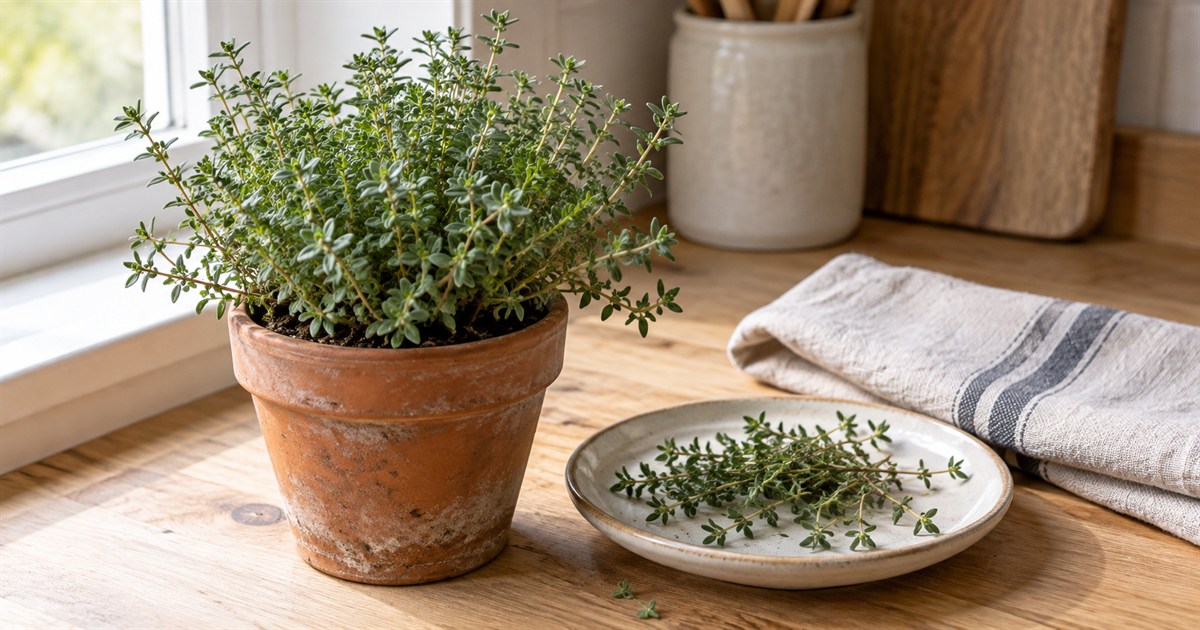
Thyme is a useful culinary herb, but it is not a remedy for everything. Fresh leaves, dried seasoning, herbal medicines and essential oil are different products. Claims about one form should not be transferred to another, especially when someone is recommending treatment for an infection, a wound or a heart problem.
You can enjoy growing or cooking with thyme without accepting broad healing promises. If the plant has personal spiritual meaning for you, keep that meaning separate from claims about what it can do to your body.
Updated September 11, 2026. This guide covers everyday uses and evidence limits, not individual treatment advice or dosing.
Quick Guide
- Use culinary thyme for flavour, not as a substitute for medical care.
- Check whether a product is food, a herbal medicine or a concentrated oil.
- Read health claims in the context of the exact preparation studied.
- Keep essential oils away from damaged skin and out of children’s reach.
- Treat spiritual symbolism as personal meaning, not a protection guarantee.
Start by identifying the form
- Fresh or dried culinary thyme: leaves sold for use in food. Follow a recipe and any packaging directions.
- Herbal medicinal products: preparations with particular ingredients, instructions and warnings. Ask a pharmacist or other qualified health professional whether a specific product is appropriate.
- Thyme essential oil: a concentrated product, not an interchangeable replacement for the herb in your kitchen.
- Homemade extracts or tinctures: variable preparations that should not be assumed equivalent to a labelled medicine.
A shared plant name does not tell you that two products have the same concentration, safety profile or evidence. Before following online advice, identify exactly what the recommendation concerns.
What about cough and other health claims?
The European Medicines Agency’s thyme summary describes certain thyme medicines for productive cough in the context of traditional use. That does not establish that a bottle of essential oil, a homemade tea or a kitchen seasoning will provide the same effect.
This guide does not recommend thyme for treating antibiotic-resistant infections, strengthening heart muscle, supporting kidney function, altering brain chemicals or preventing wound infection. A claim that a plant compound has an effect in a laboratory is not enough to establish that using the plant treats a condition in a person.
For a cough or other symptom that persists, worsens or concerns you, seek appropriate medical advice. Do not replace prescribed treatment or delay care while trying an herb. Our guide to evaluating healing claims explains a similar distinction between a personally meaningful experience and evidence of treatment benefit.
Essential-oil precautions
Poison Control warns that essential-oil misuse can cause poisoning, and that skin reactions and medication interactions are possible. Do not swallow a bottle’s contents or add oil to a drink as a home remedy. Follow product-specific instructions; do not apply essential oils to damaged skin.
Keep oils secured away from children and pets. If someone swallows an essential oil, contact Poison Control in the U.S. at 1-800-222-1222, or your local poison service elsewhere. Breathing difficulty after an allergic reaction needs emergency medical attention.
If you are considering a medicinal thyme product, discuss the actual product with a pharmacist or clinician, particularly for a child, during pregnancy or while taking medicines. This page is not a dilution chart, a dosing guide or a recommendation to start aromatherapy.
Three ordinary ways to enjoy thyme
1. Use a recipe you already trust
Try culinary thyme in a dish whose flavour you enjoy, rather than selecting it for a promised health outcome. The University of Maryland Extension’s thyme guide describes its use as a seasoning in dishes such as stews and poultry stuffing. Buy food-grade herbs from a reliable source; an article cover is not a plant-identification guide.
2. Care for a small plant
The same Extension guide describes common thyme, Thymus vulgaris, as a low-growing perennial with woody stems and small aromatic leaves. It favours light, well-drained soil. Check your plant’s care label and local growing guidance rather than assuming every windowsill will suit it.
Caring for the plant can be the activity itself. There is no need to interpret new growth as proof of spiritual progress or a struggling plant as a warning about your future.
3. Choose a personal reminder
If you associate thyme with courage or steadiness, a pot on a shelf can serve as a reminder of a value you want to practise. That is an optional personal association, not a claim about a universal tradition or an ancient ritual. No burning, ingestion or oil application is needed for the reminder to have meaning.
For a reflection practice without treatment promises, see our balanced lightwork and shadow work guide.
A simple decision before you use a product
Ask yourself three questions: What is it? What am I hoping it will do? What supports that expectation? “Dried culinary thyme for a stew” is a different decision from “thyme oil for an ongoing symptom.” For the latter, pause and get product-specific professional advice instead of improvising from a general article.
Key Takeaways
- Thyme can be enjoyed as an herb without broad medical promises.
- Food, medicines and essential oils are not interchangeable.
- Traditional use and personal symbolism do not establish a cure.
- Use appropriate professional help for symptoms and possible poisoning.
Frequently Asked Questions
Is culinary thyme the same as thyme essential oil?
No. Fresh or dried leaves used as seasoning are different from a concentrated essential oil or a medicinal preparation. Do not substitute one form for another or turn a recipe into a treatment dose.
Does traditional use prove that thyme treats illness?
No. Traditional use describes a history of use, not proof that every thyme product is effective. Evidence and instructions for one defined preparation cannot automatically be applied to another product or a homemade remedy.
Should I put thyme oil on a wound?
Do not use essential oils on damaged skin. Seek appropriate wound-care advice rather than relying on thyme oil or a homemade tincture to prevent infection.
Can thyme have personal spiritual meaning?
Yes, you can choose to use a thyme plant as a personal reminder of care, patience or courage. That symbolic meaning does not establish protection from harm, disease prevention or a guaranteed change in mood.