

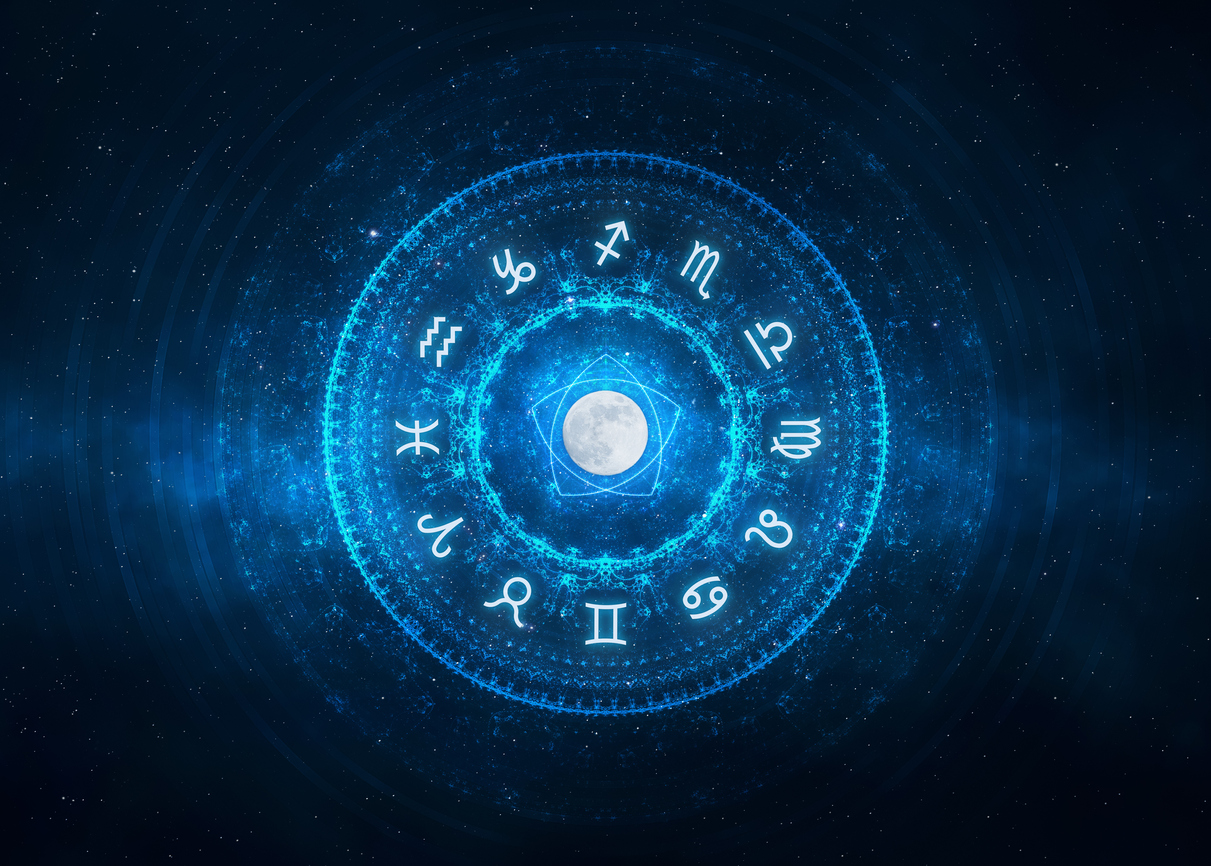
In astrology, your Moon sign is the zodiac sign assigned to the Moon’s position at your birth. Astrologers often connect it with feelings, habits and the kinds of comfort a person seeks. That is a symbolic interpretation, not a finding that the Moon determines your emotions.
You can enjoy Moon-sign language as a starting point for reflection without accepting a fixed personality label. This guide separates chart terminology from astronomy, then offers an original question for each of the 12 signs. Use any question that feels useful; none is a test of who you truly are.
Quick Guide
- Moon sign: a zodiac placement in a birth chart.
- Moon phase: the changing appearance of the Moon’s illuminated portion from Earth.
- Emotional meaning: an astrological interpretation, not a diagnosis or instruction.
- Best use here: explore a question, compare it with real experience and choose your own response.
Why Astrology Connects the Moon With Feelings
For an example from within the practice, Astrology.com’s Moon overview associates the Moon with emotion, memory and nurture. This shows how an astrology publisher interprets lunar symbolism; it does not demonstrate that a birth placement causes a particular mood.
A sentence such as “a Moon sign represents emotional needs” belongs to that interpretive framework. It should not become “you must feel this way” or “your partner cannot change.” A chart is not permission to dismiss what someone actually tells you.
Moon Sign, Sun Sign and Moon Phase Are Different
- Sun sign: the zodiac sign assigned to the Sun’s position in the chart.
- Moon sign: the zodiac sign assigned to the Moon’s position in the chart.
- Moon phase: a description such as new, crescent, quarter or full Moon.
Being born at a full Moon and having a particular Moon sign are not interchangeable descriptions. Neither statement, by itself, tells you whether someone is reliable, emotionally mature, psychic or suited to a specific relationship.
If you already have a chart, look specifically for its Moon placement rather than assuming your familiar Sun sign is also your Moon sign. If you are comparing reports, check that their birth details and calculation settings match before interpreting a difference. Do not invent missing birth information to get an answer that feels more appealing.
The Astronomy: Orbit and Phase Cycle
NASA’s guide to Moon phases distinguishes an orbit of about 27.3 days from the roughly 29.5-day interval between new Moons. These describe different cycles. The Moon reflects sunlight; its phase changes because we see different amounts of its sunlit side as it moves around Earth.
That physical explanation is separate from astrology’s use of the Moon as an emotional symbol. An astronomical cycle does not, on its own, validate a personality interpretation or prove that a feeling was caused by your birth chart.
12 Moon Signs: Optional Reflection Prompts
The themes below are an editorial exercise inspired by familiar zodiac symbolism, not measured traits or a standardized assessment. They are deliberately phrased as questions rather than predictions. You may find a question assigned to another sign more useful than the one assigned to yours.
Aries Moon: A pause before action
When I want to respond immediately, what would a short pause let me notice?
Taurus Moon: Comfort and flexibility
Which familiar routine supports me, and which one am I keeping only because it is familiar?
Gemini Moon: Finding words
Would speaking, writing or asking a clearer question help me express what is happening?
Cancer Moon: Care and belonging
What makes a place or relationship feel welcoming to me, and have I explained that need?
Leo Moon: Expression and recognition
What would I like someone to understand about me, even if I receive no applause?
Virgo Moon: Help without perfection
What small, useful action is enough today, without needing everything to be flawless?
Libra Moon: Fairness and honesty
Am I agreeing because I genuinely agree, or because disagreement feels uncomfortable?
Scorpio Moon: Privacy and trust
What am I comfortable sharing, and what boundary would help me feel respected?
Sagittarius Moon: Perspective and curiosity
What could I learn by listening before offering my own explanation?
Capricorn Moon: Responsibility and rest
Which commitment is mine to keep, and which burden have I taken on without being asked?
Aquarius Moon: Independence and connection
How can I keep my own perspective while showing interest in someone else’s experience?
Pisces Moon: Imagination and clear limits
Which part of this situation have I observed, and which part am I imagining or hoping for?
None of these themes makes one sign kinder, wiser or more trustworthy than another. A sign label should not be used to excuse aggression, assume that someone wants attention or declare that they have supernatural gifts.
A Simple Way to Reflect Without Forcing a Match
- Describe one recent situation. Write what happened in plain language, before adding a chart interpretation.
- Name your own feeling. Use the word that fits your experience, not the emotion a sign description says you should have.
- Try one question. Choose a prompt above and write a short answer. “This does not fit me” is a valid response.
- Look for both matches and mismatches. Do not count only the examples that support the description.
- Choose a practical response. You might ask for clarification, state a preference or revisit a commitment. Your choice remains yours.
Fictional example: Ellis reads a Capricorn Moon description and decides to try the responsibility prompt. Ellis realizes that the immediate issue is an extra project accepted without checking the deadline. Rather than blaming the chart or calling the trait permanent, Ellis asks the colleague to agree on a realistic schedule. The question helped organize a conversation; it did not establish why Ellis felt pressured.
Our guide to the number seven and personal symbolism uses a similar distinction between meaningful reflection and a rule that supposedly controls everyone’s life.
Do Not Turn a Chart Into a Relationship Verdict
You cannot settle what another person feels by looking up their Moon sign. Ask about preferences directly: “Would you rather talk now or after some time to think?” Listen to the answer and judge the situation by behavior, not by whether the pairing looks favorable in a chart.
Do not let a compatibility label pressure you to stay in an unwanted relationship or overlook disrespect. For a practical alternative to chart-based assumptions, see our guide to finding the right relationship without playing games.
Key Takeaways
- Moon-sign meanings are part of astrology, while Moon phases have an astronomical explanation.
- A reflection prompt can be useful even when a personality description does not fit.
- Your chart does not remove your choices or reveal another person’s private thoughts.
- Keep firsthand experience and direct communication at the center of your decisions.
Frequently Asked Questions
Does your Moon sign determine your emotions?
A Moon sign is interpreted symbolically in astrology. A chart description does not establish the cause of a feeling or dictate how you must react.
Is a Moon sign the same as a Moon phase?
No. A Moon sign refers to a zodiac placement in a chart. A phase describes how much of the Moon’s sunlit side we see from Earth, such as a crescent or full Moon.
What if my Moon-sign description does not fit me?
You do not need to force a match. Treat the description as optional symbolism, notice where it does not fit, and give your actual experiences more weight.
Can Moon signs tell me whether a relationship will work?
Do not use Moon signs as a verdict on compatibility or safety. Talk about needs, boundaries and behavior directly rather than assuming a chart reveals another person’s feelings.