

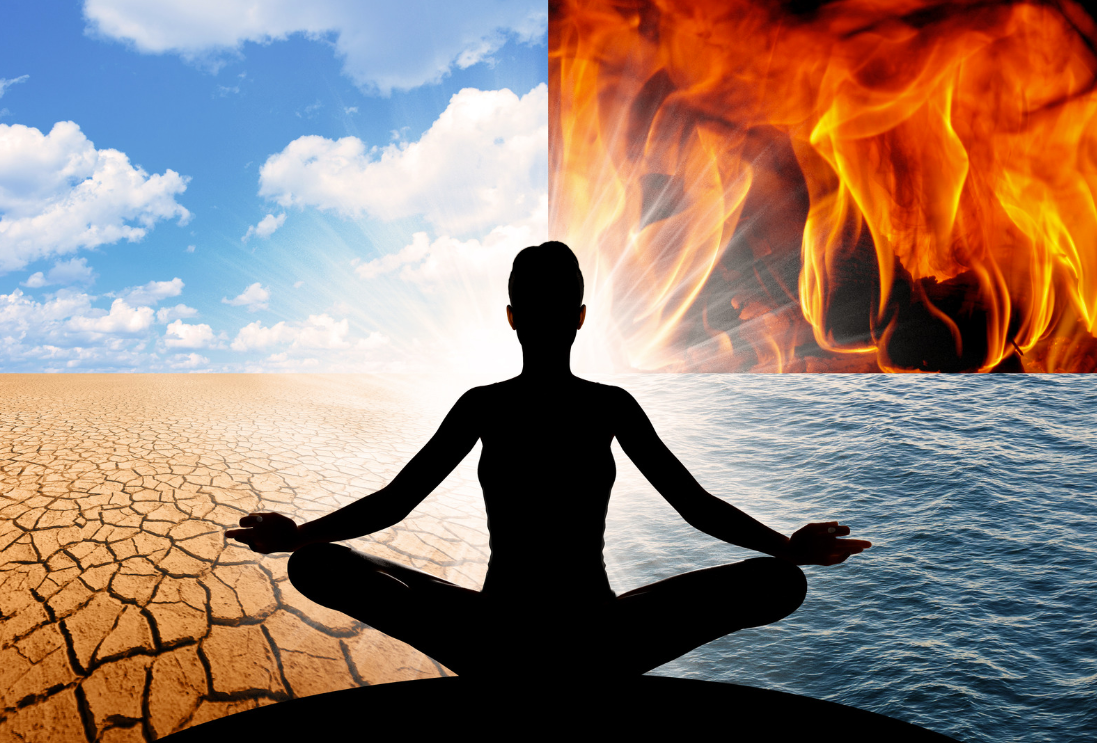
Fire, air, water and earth can be approached in two different ways: as parts of a historical philosophical model, or as symbols for personal reflection. Keeping those uses separate makes the “four elements and four powers” idea easier to understand without turning a metaphor into a scientific claim.
This guide explains one classical source, then offers four optional reflection themes: acceptance, action, discernment and support. The exercise is not a prediction, a treatment or an authenticated ancient prayer.
Quick Guide
- Historical model: Aristotle describes four elements through paired qualities.
- Personal symbolism: an element can prompt a question without controlling your life.
- Scientific boundary: resemblance or evocative language does not establish a connection to quantum physics.
- Practical use: work through four questions and choose one grounded next step.
The Classical Elements and Their Qualities
In Aristotle’s On Generation and Corruption, Book II, Part 3, the elements are paired with these qualities:
- Fire: hot and dry.
- Air: hot and moist.
- Water: cold and moist.
- Earth: cold and dry.
The passage belongs to Aristotle’s account of natural change. The labels describe his theoretical framework, not instructions for classifying every everyday sample by touch. Reading a historical model on its own terms is different from treating it as current chemistry.
Symbolism Is Not Evidence of a Physical Force
When an astrological or spiritual interpretation uses words such as energy, vibration or attraction, ask what the writer means. Is the word a metaphor, a claim within a named belief system, or something that has been measured?
This article does not establish that the elements operate through “astral magnetism,” that they pass through three experimentally demonstrated orders, or that quantum physics validates the model. Those claims need evidence beyond a resemblance between descriptions.
You can still find a symbol useful. Calling a routine “grounding,” for example, can describe the role you want it to play in your day without claiming that the earth element creates a hidden force. Our article on the number seven and its different meanings takes the same source-by-source approach to symbolism.
Four Powers as Reflection Themes
The following pairings retain the reflective idea of the original article but are presented as editorial prompts. They are not a universal religious teaching or a test of your abilities.
Water: Acceptance
Ask: “What part of this situation is outside my control today?” Acceptance here means noticing a limit, not approving of harm or deciding that nothing can change. You can acknowledge another person’s decision while still choosing your own response.
Fire: Action
Ask: “What useful action is mine to take?” Choose something concrete, such as asking a question or making an appointment. Passion alone does not show that a plan is safe or practical. You do not need a flame to use this theme.
Air: Discernment
Ask: “What do I know, and what am I assuming?” Separate an observation from the meaning you have given it. If information is missing, identify who or what could help you check it rather than treating a feeling as a final answer.
Earth: Support
Ask: “What will help me follow through?” Consider time, resources, an achievable routine or someone willing to help. Support can include changing an unrealistic plan; it does not require pushing ahead regardless of the cost.
Where Does the Prayer Fit?
The original article connected elemental imagery with the Serenity Prayer and described Celtic Christian roots. This guide does not establish that historical connection. A familiar theme is not enough to authenticate an origin, and a modern adaptation should not be passed off as an ancient text.
For background on the Serenity Prayer itself, Alcoholics Anonymous publishes an historical paper about its origins. That is a separate question from the origin of an elemental adaptation.
Here is an original, optional reflection, not a quotation from the Serenity Prayer or a historical liturgy:
May I notice what is beyond my reach, choose one responsible action, question what I have assumed, and accept the support that helps me continue.
You can read it as a secular reflection, adapt it to your own faith or leave it out. If prayer is meaningful to you but uncertainty is difficult, see finding hope when prayer feels unanswered.
Try It With One Ordinary Situation
In this fictional example, Sam is waiting for a reply about a community project. Sam cannot control when the organiser answers (water), can send one polite follow-up (fire), does not yet know why the reply is late (air), and can ask a friend to help with a backup plan (earth).
The elements did not reveal an outcome. The questions helped organise a response. You can use the same four headings in a notebook without ritual objects, special purchases or exposure to fire or water.
Key Takeaways
- Name the source when discussing historical or religious traditions.
- Distinguish metaphor from claims about physical reality.
- Use the four powers as optional questions, not guarantees.
- Check facts and practical consequences before acting.
Frequently Asked Questions
What are the four classical elements?
In the model discussed here, they are fire, air, water and earth. Aristotle’s account pairs them with hot, cold, dry and moist qualities. This is a historical philosophical framework, not a modern chemical classification.
What do the four powers mean in this guide?
Water represents acceptance, fire action, air discernment and earth support. These are editorial reflection themes, not measured forces, supernatural abilities or a universal set of traditional correspondences.
Is this an ancient Celtic Christian prayer?
This guide does not establish that origin. The reflection offered here is original editorial wording, not an authenticated historical prayer. An origin claim needs a traceable source rather than a familiar spiritual label.
Do I need candles or other ritual objects?
No. You can use the four questions on paper without flames, smoke, water rituals or special purchases. The exercise is about considering your choices, not producing an elemental effect.