

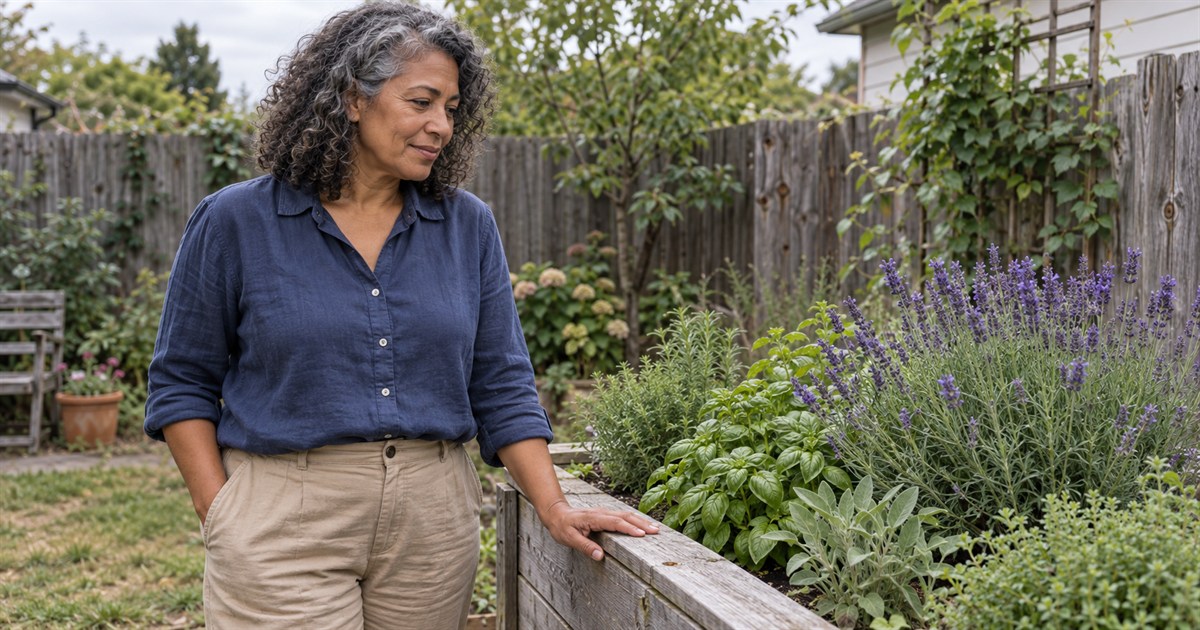
Herbs can be part of a personally meaningful routine: tending a plant, remembering a family garden or pausing beside a patch of lavender. That is different from claiming that a herb cleanses an aura, corrects a spiritual deficiency or treats illness. You do not need to take a supplement or use an essential oil to explore a plant’s symbolism.
This guide focuses on that distinction. It offers an optional reflection practice and explains why choosing herbs by an imagined aura colour, astrological quality or physical symptom is not a sound basis for treatment.
Updated September 11, 2026. This is a guide to personal reflection and evidence boundaries, not a herbal prescription or dosing guide.
Quick Guide
- Keep personal symbolism separate from claims about physical health.
- Choose a practice that does not require swallowing, burning or applying herbs.
- A pleasant scent or intuitive preference is not a diagnosis.
- Check the exact product and its risks before considering medicinal use.
- Seek appropriate care for symptoms rather than treating an aura first.
What spiritual well-being means here
In this article, spiritual well-being means reflecting on meaning, values and your sense of connection. You might connect a plant with a loved one, patience or the changing seasons. Someone else might connect it with nothing spiritual at all. Neither response needs to be corrected.
Words such as aura, vibration and chakra can describe a person’s spiritual framework. They should not be presented as clinical findings or used to explain a rash, persistent exhaustion or an infection. You do not have to accept the idea of an energy body to enjoy plants.
For another optional approach that keeps reflection separate from treatment, see our chakra self-care guide and health boundaries.
Lavender: liking it is different from proving a benefit
You may enjoy lavender’s colour or associate its scent with a familiar place. That personal experience does not establish that it instantly relaxes muscles, guarantees sleep or purifies the soul.
NCCIH’s lavender evidence summary says more high-quality research is needed. Some studies of an oral lavender oil product suggest a possible anxiety benefit, but the research has limitations. The benefits of lavender aromatherapy for sleep, stress and several other conditions remain unclear. Results from a defined product cannot simply be transferred to a homemade tea or a different bottle of oil.
Lavender products can also cause unwanted effects. NCCIH notes possible headache or coughing with aromatherapy and allergic skin reactions with topical products. Enjoyment is optional: if you dislike a scent, there is no spiritual reason to keep exposing yourself to it.
Why an intuitive herb choice is not a treatment plan
A herb coming to mind may be an interesting journal prompt. It does not show that your body lacks that herb, that a colour is missing from your aura or that you should use it for a month. Similarly, describing yourself as spiritually “hot,” “cold” or “damp” does not identify the cause of a physical symptom.
Licorice illustrates why casual recommendations deserve caution. NCCIH’s licorice-root guidance describes serious risks from glycyrrhizin, including irregular heartbeat. People with high blood pressure or heart or kidney conditions can be especially vulnerable, and interactions with medicines are possible. It is not an appropriate general recommendation for someone who feels overheated or has a rash.
Do not select a medicinal herb from a correspondence chart or replace prescribed care with cleansing. A symptom that persists, worsens or worries you deserves appropriate professional assessment; spiritual interpretation should not be a prerequisite for getting help.
A four-step plant reflection without remedies
1. Choose an ordinary point of attention
Look at a familiar garden plant, a plant you already care for or a photograph. You do not need to buy a special herb. Looking rather than handling, tasting or burning it keeps this exercise focused on observation. A picture in an article is not a plant-identification tool.
2. Describe before interpreting
Notice a few visible details: the shape of a leaf, the direction of a stem or a contrast in colour. Then name any association separately: “This reminds me of my grandmother’s garden.” An association can matter to you without being a message about your health or future.
3. Connect the thought to one value
Ask, “What would I like to practise today?” Perhaps it is patience, care or making time for someone. Choose a small action connected with that value, such as answering a friend’s message or giving yourself time to finish one task. The plant is a reminder, not the cause of a promised result.
4. End without testing yourself
You can stop after a brief pause. There is no required sensation, vision or improvement to achieve. If nothing meaningful happens, that does not mean your energy is blocked. A plain notebook, an ordinary object or a plant-free activity is equally acceptable.
Fictional example: Nadia notices a rosemary plant and remembers cooking with her father. She writes “make time for family” and decides to call her sister. She does not interpret the memory as a diagnosis, start a tincture or expect the plant to change the outcome of the call.
Before considering a herbal product
NCCIH’s supplement guidance explains that natural origin does not guarantee safety. Supplements can interact with medicines, and many have not been tested in children or during pregnancy or breastfeeding. Tell your healthcare professional about products you use, including before surgery.
Bring the actual label to a pharmacist or clinician and ask what the product is, what evidence supports the intended use and whether it fits your medicines and health circumstances. If a supplement causes side effects, stop taking it and contact your healthcare provider. Do not improvise a dose from an article about symbolism.
Food herbs, extracts and concentrated oils should not be treated as interchangeable. Our thyme guide explains the difference between culinary use and essential-oil precautions. This reflection exercise requires none of those products.
Key Takeaways
- Plants can hold personal meaning without medical or supernatural guarantees.
- Lavender research does not support universal relaxation or sleep promises.
- Intuition and aura descriptions do not establish which medicine you need.
- A simple observation-and-values practice can remain entirely free of remedies.
Frequently Asked Questions
Can herbs cleanse an aura?
Aura cleansing is a spiritual belief, not a medical diagnosis or an established treatment outcome. A plant can have personal meaning without being able to remove illness or correct an energy field.
Does liking a herb mean my body needs it?
No. A preference, dream or intuitive association does not establish a deficiency or identify an appropriate treatment. You can explore its personal meaning without taking the herb.
Is lavender guaranteed to help me sleep?
No. NCCIH says the benefits of lavender aromatherapy for sleep quality or insomnia are unclear. Research on a particular preparation does not prove that every lavender tea, oil or product will work.
Can I practise without drinking or burning herbs?
Yes. Looking at a plant, drawing a leaf or using a plant photograph as a reflection prompt does not require ingestion, smoke or essential oils. You may also choose a completely plant-free practice.