

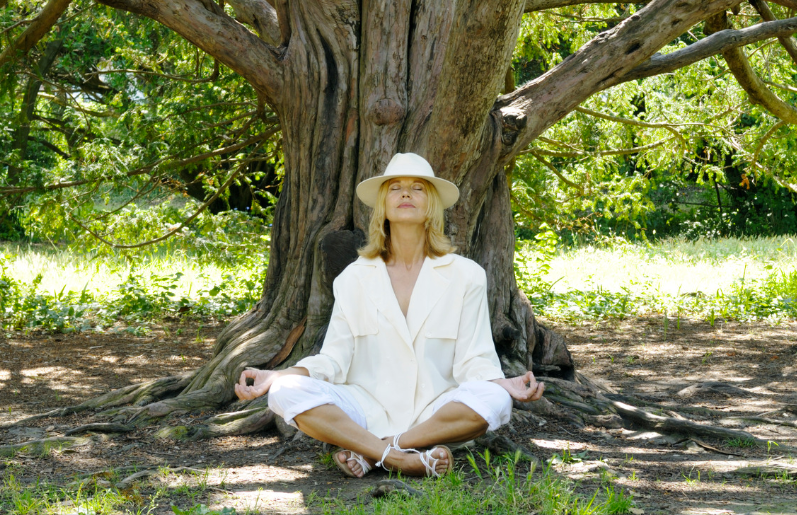
Two minutes can be a manageable place to start if you are curious about meditation but do not want a long session. Treat the time as an optional practice window, not a test of willpower or a promise of instant calm.
The aim here is to notice where your attention goes and gently return to a chosen focus. You do not have to empty your mind, close your eyes or make uncomfortable feelings disappear.
Quick guide
- Choose a safe pause when you are not driving or responsible for an attention-critical task.
- Rest comfortably; a chair is fine.
- Use an ordinary sight, sound or comfortable breathing sensation as your focus.
- Let thoughts come and go without treating them as mistakes.
- Stop early if you wish. Two minutes is a suggestion, not a minimum.
What can two minutes realistically do?
A short session gives you a small opportunity to try the activity and decide whether it suits you. That is different from claiming it will reliably treat stress, improve sleep or produce the same outcomes as a longer programme.
The National Center for Complementary and Integrative Health describes research on varied meditation and mindfulness practices, but notes limitations in study quality and interpretation. Findings about those programmes do not establish that this particular two-minute routine has a specific clinical benefit.
You might finish feeling quieter, distracted, unchanged or ready to do something else. None of those responses needs a spiritual explanation. Your experience can help you decide whether to repeat the exercise; it does not prove that it treats a condition.
An optional two-minute routine
This is an original editorial practice suggestion, not a tested treatment protocol. The timings below are approximate. You can read the steps first and use a gentle timer if useful, without watching the seconds closely.
- First 30 seconds: settle. Sit in a supported position and let your hands rest. Keep your eyes open if that is more comfortable. Notice the room around you; no special posture or setting is required.
- Next 60 seconds: choose one focus. Look at the outline of an ordinary object, notice a familiar background sound or attend to breathing only if that feels comfortable. Do not deepen, speed up or hold your breath. If a thought takes your attention, notice that and return without criticism. You may do this many times.
- Final 30 seconds: finish deliberately. Notice your surroundings again. Decide whether to return to your activity, take an ordinary break or write down a practical next step. You do not need to check whether you feel sufficiently peaceful.
If you stop before the timer, the session is still finished. There is no requirement to repeat it until you get a particular feeling.
“Clear your mind” is not the assignment
The NHS mindfulness guide explains that mindfulness is not about making thoughts vanish. It describes noticing thoughts and returning attention when the mind wanders. It also makes clear that mindfulness is not helpful for everyone and can leave some people feeling worse.
For this exercise, try replacing “I must stop thinking” with “I noticed a thought.” You do not need to analyse its cause or resolve the issue during these two minutes. If something needs action, you can address it afterwards.
Three ways to fit a pause into an ordinary day
- After finishing a task: close the document or put the materials down before beginning. Let the pause separate two activities rather than adding another demand while you work.
- During an available break: choose a place where you can remain safely seated and interruption will not create a problem. You do not need silence.
- Before a routine activity: leave enough time that the exercise will not make you rush. If you are already late, skip it.
Choose one opportunity rather than scheduling repeated sessions throughout the day. If you miss it, you can try another day without making up time. Our practical stress-management guide explores other options when what you need is a boundary, rest or support rather than another exercise.
A fictional example: a small pause, not a transformation
Farah tries the routine after putting away her work materials. She keeps her eyes open and looks at a plant because watching her breathing does not appeal to her. Several thoughts about tomorrow arrive; she notices them and returns to the shape of a leaf.
When she finishes, she is not suddenly relaxed. She writes down one task for tomorrow and leaves the rest for later. She may try the pause again, but she does not treat a busy mind as failure or buy a reading to explain it.
Kind intentions do not demonstrate energy transfer
You may choose to finish with a private kind wish for yourself or someone else. Treat that as an expression of care, not evidence that the universe has delivered energy or changed another person’s emotions.
If you want to offer practical support, consider what the person has actually requested and respect their boundaries. A private meditation does not replace communication, consent or appropriate care.
When to change the exercise or stop
Do not push through distress, dizziness or discomfort to complete a timer. Stop, orient to your surroundings and choose another activity if the practice is not helping. For persistent or concerning symptoms, seek appropriate professional support.
NCCIH notes that negative experiences can occur and that evidence about meditation’s safety is incomplete. It advises against replacing conventional care or delaying a health assessment with meditation. A short duration does not remove the need to pay attention to how you feel.
If you want instruction, ask about the teacher’s training, options for adapting a practice and how they respond when someone becomes uncomfortable. Our guide to choosing a meditation practice offers further questions without requiring you to adopt a spiritual framework.
Key takeaways
- Two minutes is a practical starting length, not a guaranteed therapeutic dose.
- A comfortable position, open eyes and an external focus are options.
- Wandering thoughts do not invalidate the exercise.
- Stopping, choosing another activity or seeking support are legitimate choices.
Frequently asked questions
Is two minutes of meditation enough?
Two minutes can be a manageable length for trying an attention exercise. It is not a proven universal dose for health benefits, and this routine is not equivalent to a structured treatment programme.
Do I need to stop thinking while I meditate?
No. When you notice that attention has wandered, you can gently return to your chosen focus. You do not need to suppress thoughts or restart the timer each time they appear.
Can I keep my eyes open and avoid focusing on breathing?
Yes. For this optional exercise, you can look at an ordinary object or notice a familiar sound instead. Let breathing remain natural and choose a comfortable position.
What should I do if meditation makes me feel worse?
Stop rather than pushing through. Return attention to your surroundings and seek appropriate support for persistent or concerning symptoms. Meditation should not replace or delay professional care.