

Connecting with a spirit guide is a spiritual aim, not an outcome this article can promise. If the idea matters to you, you can approach it through optional reflection while keeping your decisions grounded in information, consent and ordinary support.
The earlier page offered seven practices and assured readers that spirits would help. This revision keeps the practice ideas but changes their purpose: clarify a question, notice your own responses and retain the freedom to stop. It does not verify a guide’s presence or a message’s source.
Quick guide
- Choose one practice rather than trying to produce a special experience.
- Keep a question separate from an impression or possible answer.
- Do not make coincidences into instructions.
- Check practical information before acting.
- No response does not mean you failed or need to buy help.
Set a clear boundary before you begin
Try this plain-language intention: “I am taking time to reflect. I can accept, question or set aside whatever comes to mind.” This is an original editorial suggestion, not a formula for summoning a being.
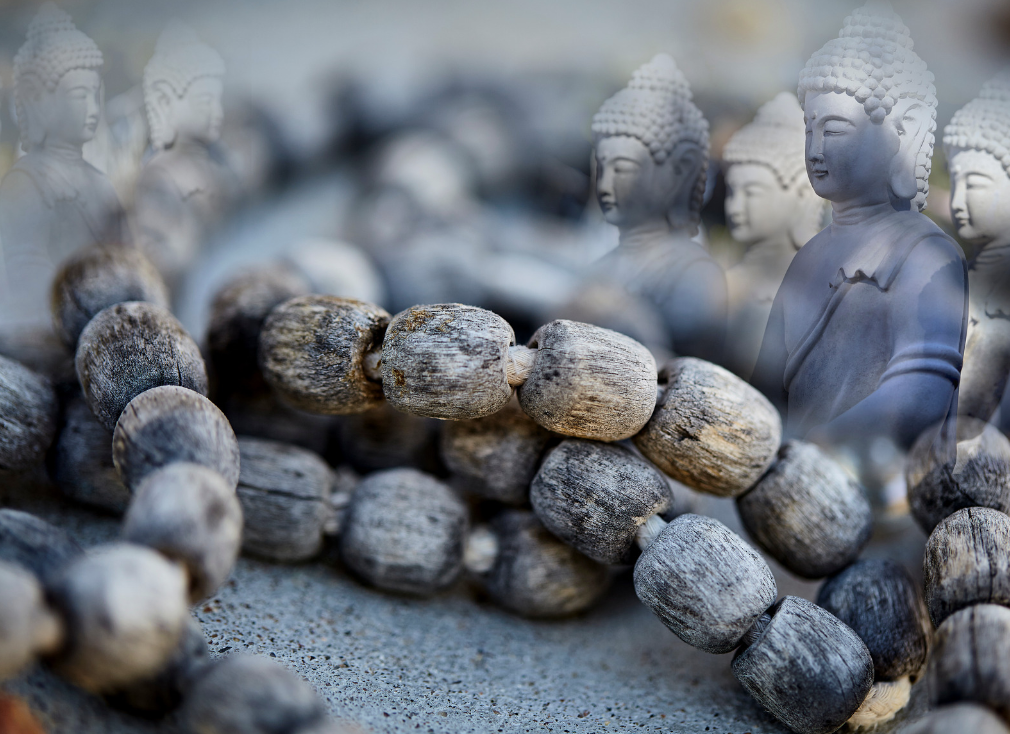
For background on the belief and the limits of guide labels, see our introduction to spirit guides. The statue-and-bead montage on this page is a symbolic illustration; it does not establish a Buddhist endorsement of these practices or show spirit contact.
Seven practice ideas, with practical limits
1. Ask a question you can work with
Instead of requesting a guaranteed outcome, write a question about your choices. “What information do I need before agreeing?” leaves room for practical checking. “Make this person choose me” does not respect the other person’s autonomy.
If you cannot find your car, need urgent assistance or face another immediate problem, use the relevant ordinary help. Asking a spiritual question should not delay action that the situation requires.
2. Loosen expectations without giving up judgment
You do not need a particular face, name, sensation or dramatic answer to appear. Letting go of an expectation can simply mean allowing the exercise to end without a result.
It does not mean accepting every impression as true. You remain free to disagree with something that comes to mind, especially a request involving secrecy, payment, harm or another person’s boundaries.
3. Treat meditation as an optional pause
You can sit comfortably, keep your eyes open and notice an ordinary object. No special frequency, posture or breathing pattern is required here. Finish when you choose, and stop if the practice feels uncomfortable or distressing.
The NCCIH overview of meditation and mindfulness notes limits in the research and reports of negative experiences. It advises against replacing conventional care or delaying a medical consultation. That research does not verify the earlier page’s claim that “attunement” connects you to guides or produces healing.
4. Use a symbol or guidance box as a reminder
A chosen object can remind you of a question or value. Finding something similar later is not, by itself, an answer from a guide. You do not have to search for repeated signs or change a decision because a particular object appears.
For a guidance box, write three things on a note: your question, the information you need and a time to review it. Fold it away if that feels useful. At review time, use whatever ordinary information you have gathered; the box has not promised a response.
5. Make a simple space for two-colour writing
An ordinary table and paper are enough. You do not need candles, incense or purchased ritual items. If you enjoy using two pens, write the question in one colour and your response in the other.
Label the second section “my reflection,” not “verified message.” Pause to read it, cross out anything you do not endorse and keep your own judgment involved. You do not need to surrender control of your hand or continue writing when you want to stop.
6. Separate patience from outsourcing a decision
Allowing time for reflection does not mean trusting an unseen helper to complete a practical task. List the part you can do, the information another person can provide and anything still uncertain.
You may wait for an answer from a relevant person or service. You do not need to wait indefinitely for a sign, and a missed deadline is not evidence that a guide has a better plan.
7. Let sleep remain sleep
If you remember a dream after waking naturally, you can note it as a dream. Do not force recall, interrupt sleep or assume a vivid scene contains instructions from a guide.
Our dreams-and-visions guide explains how to keep original dream content separate from interpretation and later comparisons. A dream can be personally meaningful without establishing external contact.
A four-part review before acting
After any of these activities, consider this original checklist:
- What did I record? Keep the actual words or image separate from the story you added.
- What can I check? Identify facts that a person, document or qualified professional can clarify.
- Whose choice is involved? A private impression cannot supply another person’s consent.
- Can the action stand on its own? Choose a step that is reasonable even if the impression has no supernatural source.
If you cannot answer those questions, you can leave the decision open. Neither a reader’s confidence nor a repeated ritual requires you to act.
A fictional example: the box does not choose
Farid is considering volunteering for a weekly community activity. He places a question in a small box, then asks the organiser about the hours and responsibilities. Later he notices a bird he had chosen as a personal symbol.
He does not treat the bird as permission to ignore his schedule. At his planned review, the actual hours do not fit, so he declines and asks about occasional opportunities instead. The box helped him set aside time to think; it did not make the decision.
If nothing happens, or the practice becomes a burden
No answer is required. Silence does not prove that you were impolite, spiritually blocked or unworthy. You can stop a session, leave a notebook closed or choose a nonspiritual activity.
Be cautious about any claim that payment, repeated readings or greater obedience is necessary to restore access to a guide. You do not need to establish contact to deserve support with a real problem.
When an experience calls for medical help
The NHS guidance on hallucinations and hearing voices advises medical help for experiences that seem real without an external source. In the UK, seek an urgent GP appointment or NHS 111 advice for hallucinations; elsewhere use appropriate local medical services.
If voices tell you to harm yourself or someone else, hallucinations rapidly worsen or you suddenly become confused, seek emergency help. In the UK call 999 or go to A&E without driving yourself; elsewhere use the local emergency service. An ordinary imagined response is not automatically a hallucination, and this article cannot assess your experience.
Seeking help does not require settling a spiritual question first. Do not follow harmful commands or change prescribed treatment because of a supposed message.
Key takeaways
- A reflective practice is not proof that a guide answered.
- Symbols, writing and dreams can remain personal rather than authoritative.
- Practical checks and consent belong in every decision.
- You can end a practice without a response or explanation.
Frequently asked questions
Can these practices guarantee contact with a spirit guide?
No. They are optional reflection ideas, not verified methods for contacting an external being. A thought, dream or coincidence does not establish its source.
How can I use a guidance box without relying on signs?
Write a question, note the practical information you need and choose when to review it. Treat the box as a place to set a question aside, not as a promise that a supernatural answer will arrive.
Does two-colour writing produce messages from guides?
Using separate colours can distinguish a question from your own response. It does not verify who produced the words. Read what you wrote critically and do not treat it as an instruction you must obey.
What if I receive no response?
No response is not proof that you asked incorrectly, lacked faith or were rejected. You may stop, use a different reflective activity or seek ordinary support without purchasing another method.