

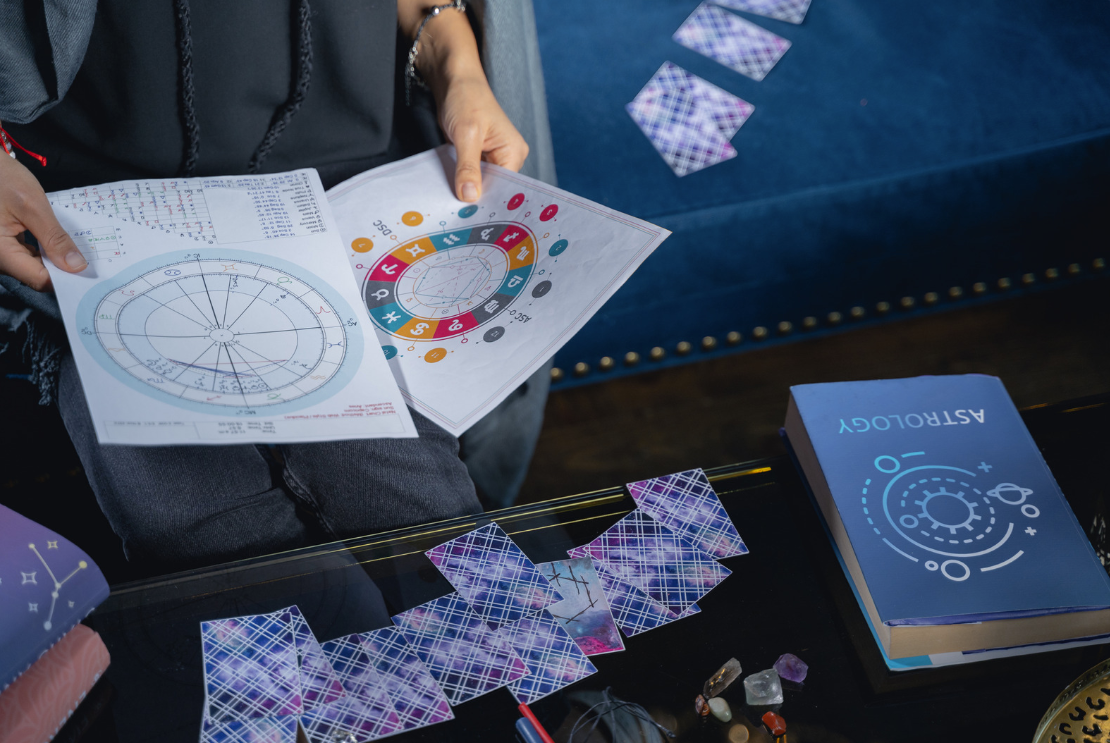
Planetary themes can give an astrology journal a structure, but they should not decide your life for you. A birth chart does not establish that you are blocked, destined for luck or required to suffer. If you enjoy astrology, use its symbols to ask useful questions and then check the answers against your actual circumstances.
This guide separates retrograde motion from its spiritual interpretation and offers nine original reflection prompts. They are optional exercises, not predictions, personality diagnoses or a promise that a planet will change your confidence, relationships or health.
Retrograde is apparent motion, not a type of planet
Mercury is a planet, not “a retrograde.” NASA’s explanation of retrograde motion describes an apparent change in a planet’s movement across the sky as viewed from Earth. The planet does not physically reverse its orbit. For outer planets, the apparent reversal occurs as Earth catches up with and passes them.
In a natal chart, a retrograde marker refers to the time of birth. In a transit chart, it refers to the time being examined. These are different uses of a chart; a current retrograde period does not alter the astronomical positions recorded for your birth. Neither Mercury nor Mars is permanently retrograde.
Astrologers may attach inward-looking or reviewing themes to retrogrades. That is an interpretation layered onto the calculated motion, not evidence that your thoughts, character or future have been measured.
Keep chart labels separate from personal conclusions
Before reading an interpretation, identify the body, the chart type and the date or birth data used. Check whether the description concerns a planet’s sign, house, aspect or retrograde marker; those terms are not interchangeable. If two charts look different, compare their settings before deciding that one reveals a hidden problem. Our guide to Western and Vedic chart differences explains why reference systems matter.
Astrology also uses some body names differently from astronomy. NASA classifies Pluto as a dwarf planet. Chiron is a small Solar System body classified as a centaur, as described in observational research on Chiron, rather than one of the eight major planets. Including these bodies in an astrological reading does not change their astronomical classification.
Nine themes you can turn into practical questions
Astrology.com’s planetary guide is one example of modern astrological symbolism, including communication for Mercury, relationships for Venus, passion for Mars, luck for Jupiter, karma for Saturn, rebellion for Uranus, illusion for Neptune and power for Pluto. These are practitioner associations, not demonstrated effects on your life.
The questions and small actions below are our own editorial exercises. You can use them regardless of whether a body is retrograde, and you do not need a chart to answer them. Choose the one that fits a real situation; do not force yourself to match every description.
Mercury: clarify a message
Question: What have I assumed another person understood?
Small action: Rewrite one unclear request in plain language, or ask a neutral follow-up question. Do not assume a misunderstanding happened because of Mercury. Compare what was actually said with what you inferred.
Venus: notice what you value
Question: Which preference am I setting aside just to seem agreeable?
Small action: Name a preference about time, company or an everyday purchase without judging someone else’s different choice. Being introverted is not a flaw a planetary placement must repair.
Mars: make a clear, respectful request
Question: What do I want to ask for, and what response must I leave the other person free to give?
Small action: Draft one direct request with room for a genuine no. Assertiveness does not mean pressure, and an astrology label does not excuse aggression.
Jupiter: test an appealing opportunity
Question: What attracts me to this possibility, and what information is missing?
Small action: Check one relevant fact before committing. “Luck” is an astrological theme, not a guarantee of money or success. An opportunity still needs practical evaluation.
Saturn: choose a manageable commitment
Question: Which responsibility is mine, and which am I taking on unnecessarily?
Small action: Set a realistic limit or a small completion target. This prompt is about workable boundaries, not deserving punishment or accepting blame for everything that happens.
Uranus: consider one reversible change
Question: Is there an ordinary routine I would like to try differently?
Small action: Test a low-stakes alternative and decide afterward whether it helped. You do not need a dramatic break with your life. Struggling with change does not mean someone chooses suffering or should be blamed for being harmed.
Neptune: distinguish imagination from evidence
Question: Which part of this story is something I know, and which part is something I hope?
Small action: Write one sentence under each heading. Imagination can be meaningful without becoming proof. You do not owe someone vulnerability or trust simply because a reading recommends openness.
Pluto: examine control and support
Question: What is actually within my influence, and where could appropriate help be useful?
Small action: Identify a task you can share or a boundary you want to keep. Do not use a chart to dismiss a real concern about manipulation or to pressure yourself to reconnect with someone unsafe.
Chiron: allow support without demanding a lesson
Modern astrologers often discuss Chiron through wounded-healer imagery; the AstroTwins’ Chiron guide is a practitioner example. That symbolism is not evidence that a chart can diagnose or heal pain.
Question: What kind of support would be welcome without requiring me to explain this experience spiritually?
Small action: Consider one appropriate person or service you could contact. You can skip this prompt entirely. Pain does not have to produce growth, and astrology should not be used to postpone health care or excuse continued harm.
Use a four-line reflection record
- Theme: The symbol or question I chose.
- Observation: One event I can describe without interpreting someone else’s motives.
- Alternative: Another ordinary explanation I should consider.
- Action: One small step I can evaluate afterward.
For example, imagine Ada, a fictional reader who chooses the Mercury prompt after a missed meeting. Her observation is that two invitations showed different times. Rather than writing “retrograde ruined communication,” she considers an outdated calendar entry and asks the organizer which time is correct. The journal prompt helped her focus on a practical question; it did not establish a planetary cause.
Review the result in ordinary terms: Did the conversation clarify something? Did the boundary help? Was the idea unsuitable? It is acceptable to discard an interpretation that does not fit. For a related approach to emotional symbolism, see our moon-sign guide.
Keep the interpretation optional
A chart should not be used to label someone unreliable, diagnose an illness, promise financial gain or tell you to endure mistreatment. You remain free to disagree with a reader, decline a service or make a decision without consulting astrology. The useful part of a reflective exercise is the question it helps you ask, not surrendering your judgment to a prediction.
Frequently asked questions
What does retrograde mean in a birth chart?
A retrograde marker records apparent backward motion at the time represented by the chart. It does not mean the body reversed its orbit or that the person is defective. Astrologers may interpret the marker symbolically, but that interpretation is separate from the astronomical calculation.
Are Mercury and Mars always retrograde?
No. Retrograde describes a period of apparent motion, not a permanent kind of planet. A natal chart describes the birth moment; a current transit chart describes a different time. Check which chart you are reading.
Can planetary placements tell me what decision to make?
Use planetary themes as optional questions, not instructions or guarantees. Check real circumstances, your preferences and relevant evidence before deciding. A chart should not replace qualified medical, financial or legal advice.
Does Chiron mean I have to suffer to grow?
No. Chiron’s wounded-healer imagery is a symbolic interpretation, not a requirement to endure harm or avoid treatment. You do not have to find a spiritual lesson in pain, and seeking support is compatible with personal reflection.