

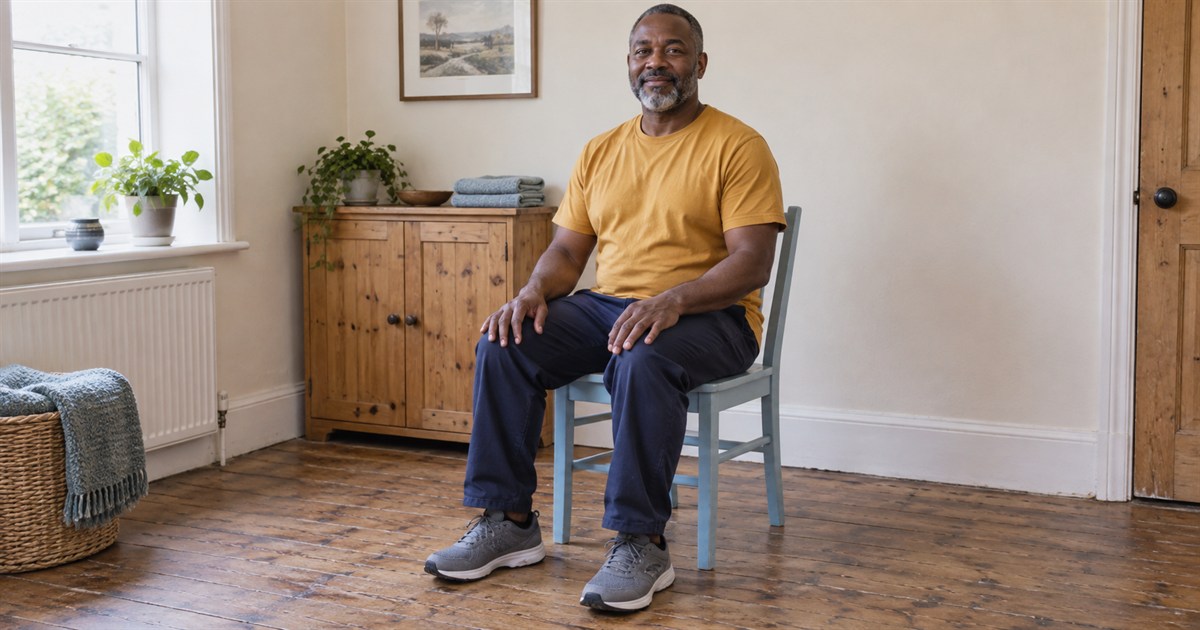
At-home chakra exercises can be approached as an optional combination of gentle movement and personal reflection. They are not a way to diagnose a blocked energy centre or treat diabetes, heart disease, thyroid problems or other health conditions. A sensation during practice does not tell you whether an organ is healthy.
If chakra language is meaningful to you, you can keep that personal meaning while choosing ordinary, comfortable activities. This guide offers a short chair-based sequence with no floor poses, headstands or forced breathing.
Updated September 11, 2026. These general suggestions are not an individual exercise prescription or medical advice.
Quick Guide
- Use chakra language as a spiritual framework, not a symptom checklist.
- Set up a stable chair and clear space before starting.
- Choose one comfortable movement; the reflection-only option is equally valid.
- Breathe normally, and stop for pain, dizziness or distress.
- Finish with a practical next step rather than trying to prove that energy moved.
What this routine can and cannot show
The purpose here is to make a brief pause manageable at home. You might enjoy the movement, find the reflection useful or decide the activity is not for you. None of those responses measures a chakra, confirms a blockage or demonstrates a cure.
NCCIH’s yoga overview describes research on outcomes such as stress and balance, but that does not establish chakra-unblocking claims or validate the particular sequence below. This is an editorial routine, not a studied treatment program or a traditional sequence. For broader spiritual reflection prompts, see our chakra self-care guide.
Set up before you begin
Choose a solid chair without wheels, with enough room around it. Wear comfortable clothing and keep the floor clear. The NHS sitting-exercise guide recommends a stable, armless chair that lets your feet rest flat on the floor. It also advises checking with a health professional if you are unsure whether its exercises are suitable for you.
If you have a health condition, an injury, balance difficulties, are pregnant or have been advised to limit exercise, ask your care professional what is appropriate before trying new movements. You can skip movement entirely. Do not force your body into the pictured position if it does not suit your needs.
A five-part home practice
Try only the parts that feel appropriate. There is no required number of minutes, no need to complete every step and no benefit to pushing through discomfort.
1. Settle into support
Sit in a comfortable, supported position. Notice the chair and the floor rather than searching inside your body for a problem. If you use the word “grounding,” let it mean this ordinary moment of noticing support. You do not need bare feet, special equipment or an outdoor surface.
2. Let breathing stay ordinary
Leave your breathing at its usual comfortable pace. There is no breath-holding, rapid breathing or instruction to draw unusually large breaths. If attention to breathing feels uncomfortable, look at a familiar object in the room instead, or end the practice.
3. Choose a gentle movement, or stay still
If suitable for you, try the chest stretch described in the NHS guide linked above: sit upright away from the chair back, ease your shoulders back and down, and extend your arms to the sides. Gently lift your chest until you feel a comfortable stretch. The NHS suggests holding for five to ten seconds; release earlier if needed. You do not have to repeat it or complete the full NHS routine.
This is a physical stretch, not a method for treating a heart condition or opening a heart chakra. Avoid forcing your shoulders, arching deeply or working through pain. If the movement does not suit you, remain comfortably seated and move on.
4. Choose one reflection question
Ask yourself, “What would make the rest of today a little more manageable?” Your answer might be a quieter schedule, a conversation or help with a task. You can connect that question to a personal spiritual theme, but it does not need a chakra label.
If no answer comes, leave the question open. You are not failing an exercise, and there is no need to invent a message or reinterpret a physical symptom.
5. Close with one ordinary action
Return your attention to the room. Choose a small action within your control, such as adjusting an uncomfortable workspace or sending a message to arrange support. End the session without checking for colours, vibrations or a “cleared” feeling.
Make it fit your day
Fictional example: Martin wants a short pause between household tasks. He sets up a chair, sits comfortably and skips the stretch because he is unsure whether it suits his shoulder. His answer to the reflection question is to ask for help carrying a heavy box. He sends a message and returns to his day. The practice has helped him identify an action; it has not diagnosed or corrected an energy blockage.
If you want to keep a note afterward, record what you actually did and whether it was comfortable. Our chakra awareness guide explains how to separate an observation from the meaning you give it. Avoid rating your spiritual worth or assigning a medical explanation to the experience.
Practices to leave out and when to stop
Do not add headstands, shoulder stands or forceful breathing to make this routine feel more powerful. NCCIH advises yoga beginners to avoid these extreme practices and recommends qualified instruction. It also advises against using yoga to postpone medical care.
Stop if you develop pain, dizziness, unusual breathlessness or distress. Do not call these symptoms “energy releasing” and continue. Seek appropriate care for symptoms that persist or concern you. For severe chest pain, severe breathing difficulty or another emergency, contact local emergency services.
It is fine to stop because you simply do not enjoy the practice. A spiritual activity should not require you to override your limits, buy a product or accept blame for not feeling different.
Key Takeaways
- Home chakra practice can be optional reflection, not a health diagnosis.
- A chair-based pause can avoid floor poses and demanding techniques.
- Movement is optional, and comfort takes priority over completing a sequence.
- Use professional care for health concerns, not chakra interpretations.
Frequently Asked Questions
Can home exercises unblock chakras?
Chakra unblocking is a spiritual interpretation, not an outcome you can confirm from a stretch or sensation. This routine is an optional movement and reflection break, not a treatment or a test of energy flow.
Do I need to do headstands or hold my breath?
No. This routine uses neither. NCCIH advises beginners to avoid extreme yoga practices, including headstands and forceful breathing. More demanding does not mean more spiritually effective.
Can I do the routine without getting on the floor?
Yes. The routine is designed around a stable chair, with the physical movement optional. If a movement or position is unsuitable for you, skip it and ask a qualified professional about an appropriate alternative.
Does pain mean a chakra is releasing a blockage?
Do not interpret pain that way or push through it. Stop the activity. Seek appropriate medical advice for persistent or concerning symptoms rather than treating them as proof of a spiritual process.