

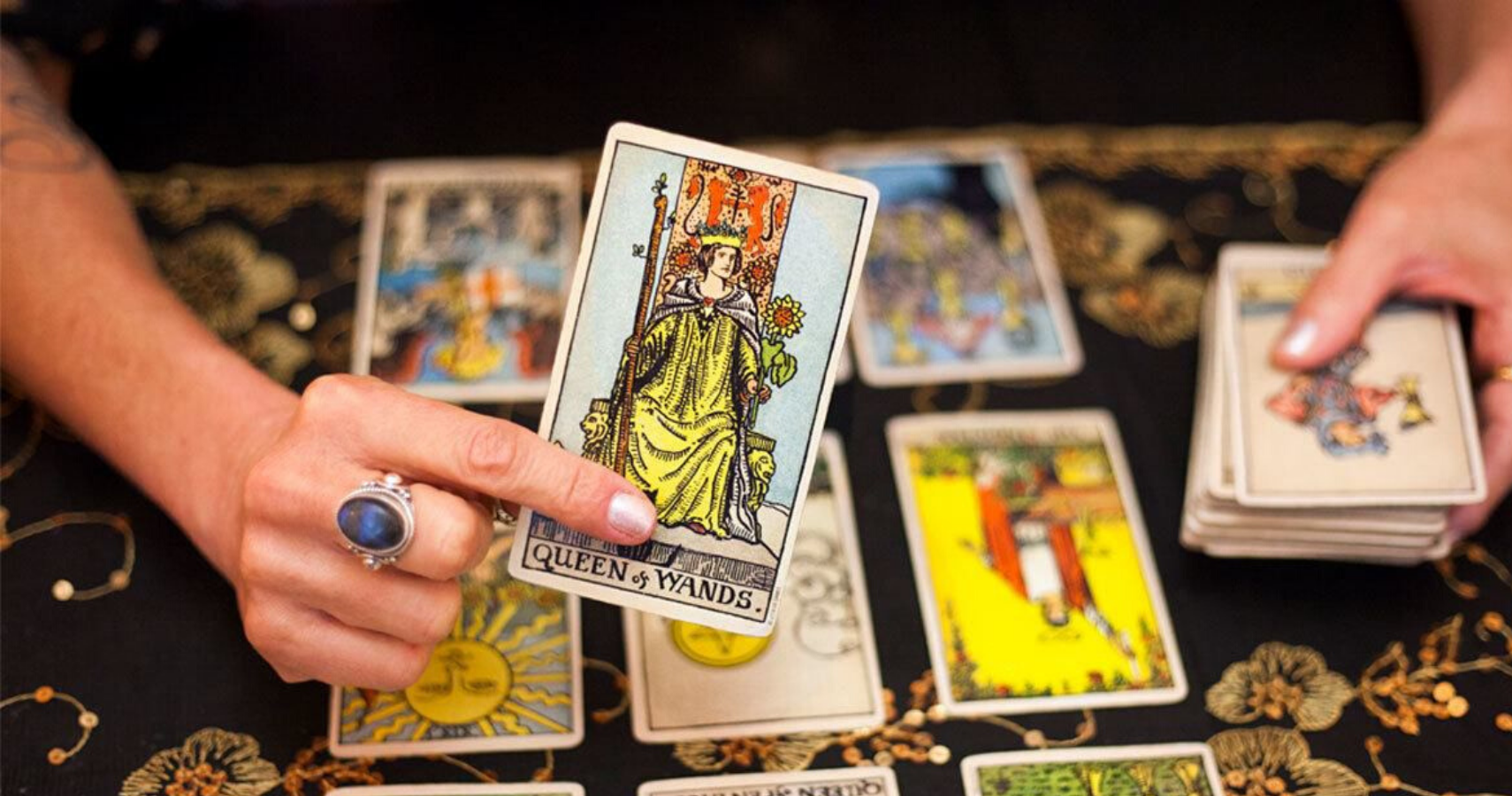
Tarot advice is most useful when a reader explains what comes from the card, what comes from a guidebook and what is their own interpretation. You can explore a symbol without promising that it predicts an event or proves a psychic ability.
This four-card practice is for people learning tarot, including mediums who choose to use cards. It keeps the focus on thoughtful questions, honest wording and the other person’s freedom to disagree.
Quick guide
- Separate the practices: interpreting tarot is not the same as establishing communication with someone who has died.
- Keep the source visible: distinguish a card’s imagery, a published interpretation and your personal association.
- Make room for uncertainty: no card guarantees luck, love, money or victory.
- Respect boundaries: the person receiving a reading can decline a topic, reject an interpretation or stop.
Tarot reading and mediumship are not interchangeable
A tarot reading interprets cards in relation to a question. Mediumship involves a practitioner’s claim to communicate with deceased people. Someone may combine these approaches, but drawing a card does not independently verify the origin of an impression.
If you offer both, explain which part of the session you are providing. Do not turn a card’s familiar family image into a statement that a particular relative is present. “This picture brings family memories to mind” is a description of an association; “Your mother is telling you this” makes a different claim.
Our guide to mediumship readings, grief and safer choices discusses that distinction from the client’s perspective.
Build an interpretation in three layers
- Observation: describe what is actually on your card. Notice figures, objects, colours and movement before connecting them to someone’s life.
- Published meaning: consult the guide for your deck or a clearly named source. Do not present one author’s interpretation as the only possible meaning.
- Personal response: record what the image brings to mind for you. Label this as your association, not information you have verified about another person.
Intuition can supply a question to explore, but it should not override what a person tells you about their circumstances. If your interpretation does not fit, let it remain a mismatch. Do not insist that the client is secretly blocking the message.
A four-card practice: strength, change, protection and recognition
The examples below use Arthur Edward Waite’s The Pictorial Key to the Tarot as a named historical interpretation. His descriptions document his approach to symbolism and divination; they are not evidence that the cards predict real events. The reflection questions and suggested actions here are our own editorial exercise, not quotations or a traditional spread.
Select these four cards deliberately for study, or read the prompts without a deck. The exercise does not require a random draw, a special gift or a paid session.
1. Strength: respond firmly without becoming harsh
Waite’s description of Strength centres on a woman and a lion and develops a spiritual meaning of fortitude. He distinguishes his interpretation from ordinary self-confidence. Our everyday prompt is a separate adaptation of the image, not a claim to reproduce all of his teaching.
Ask: Where could I combine firmness with patience? What would a calm, clear response sound like?
Try: write one sentence that states a limit without insulting the other person. Strength need not mean staying in a harmful situation or tolerating mistreatment.
2. Wheel of Fortune: prepare for change without promising luck
In his Wheel of Fortune discussion, Waite connects the wheel with movement and the changing course of human life. That symbolism can start a conversation about uncertainty; it cannot tell you that a bad situation is about to become profitable or that a new partner will arrive.
Ask: What is changing? Which part can I influence, and what remains outside my control?
Try: make a small plan for two possible outcomes. For example, prepare what you will do whether an invitation is accepted or declined, instead of reading the card as a guaranteed yes.
3. Four of Pentacles: examine protection without abandoning it
Waite’s Four of Pentacles depicts a figure holding onto possessions. His listed meanings include security in what one has. That is different from declaring that someone’s personal boundaries are blocking love or abundance.
Ask: What am I trying to protect? Is this limit serving me, or is there a specific adjustment I freely want to make?
Try: name one boundary to keep and one ordinary habit you might reconsider. You could protect your private messages while choosing to make more time for a trusted friend. Neither choice requires giving someone access to your money, body or personal information.
4. Six of Wands: define recognition in practical terms
Waite’s Six of Wands includes a triumphant rider and associations with welcome news and fulfilled hopes. These are symbolic meanings in his text, not a promise that your efforts will receive a reward.
Ask: What progress can I already point to? Whose contribution deserves acknowledgement?
Try: record one completed action and one next step. Thank someone who helped if you want to, without treating praise, promotion or romantic attention as something the card guarantees.
Turn the reading into a checkable next step
Keep a short note with four separate entries: the question, the card or image, your interpretation and the action you chose. Later, review what actually happened. Do not rewrite the original interpretation to make every outcome look like a prediction that came true.
Fictional example: Alex is preparing a difficult conversation about shared household tasks. Strength becomes a prompt to speak clearly; the Wheel suggests preparing for more than one response; the Four of Pentacles reminds Alex to retain a limit on late-night discussions; and the Six of Wands prompts acknowledgement of a task already completed. The practical result is a conversation plan, not evidence that the cards know what the housemate will do.
For help wording a focused question, see our guide to questions for an email reading. Questions about your choices leave more room for useful reflection than demands for certainty about another person’s private thoughts.
Extra care when reading for someone else
- Agree on the scope first. Explain the format, fee if any, time limit and topics the person does not want to discuss.
- Ask rather than declare. “Would you like to explore this theme?” leaves room for a genuine no.
- Do not invent messages from deceased people. A comforting story is not a reason to present an unverified claim as fact.
- Avoid dependency. Do not suggest repeated paid readings are necessary to prevent harm or keep a spiritual connection open.
- Stay within your role. Do not use cards to diagnose an illness, establish an accusation or direct consequential medical, legal or financial decisions. Those questions need relevant evidence and appropriately qualified help.
These are the boundaries recommended for this exercise, not a claim that every reader follows a single professional standard. The person receiving a reading remains free to set it aside.
Key takeaways
- A source-based interpretation and a personal association should be distinguishable.
- The four cards can support questions about action, uncertainty, boundaries and progress without making predictions.
- A meaningful experience does not by itself prove mediumship or psychic ability.
- Keep practical decisions grounded in facts, consent and your own judgement.
Frequently asked questions
Does reading tarot mean you are a medium?
No. Interpreting cards and claiming communication with deceased people are different practices. A person may offer both, but a tarot interpretation does not itself establish spirit contact.
Can the Wheel of Fortune guarantee good luck?
No. You can explore change through its symbolism without treating the card as a promise of money, opportunity or a particular outcome.
Does the Four of Pentacles mean I should drop my boundaries?
No. Use it as an optional prompt to examine what you protect and why. A card is not a reason to give up privacy, financial limits or a boundary that keeps you safe.
How can I practise tarot without making predictions?
Choose a present-day question, describe the image, note the guidebook interpretation and write your own response separately. Finish with one practical action you can assess without relying on the cards.