

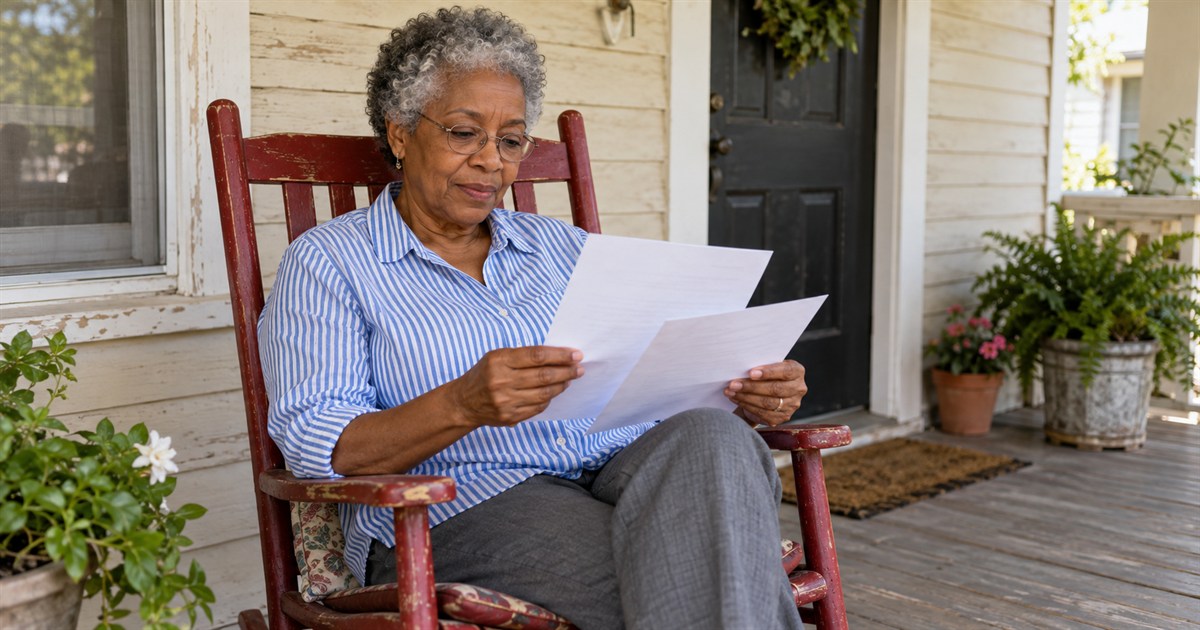
An email psychic reading gives you a written response you can revisit. It does not, by itself, establish that the information is accurate or that it came from a paranormal source. If accuracy matters to you, start with the exact claims in the answer rather than its confident tone or how much personal detail you supplied.
This guide offers a practical way to review a response without oversharing. It is not a scientific test, a provider ranking or a promise that any preparation method will produce a correct prediction.
Updated September 11, 2026.
Quick Guide
- Keep the original question and reply together.
- Separate facts, predictions, interpretations and suggestions.
- Record what you told the reader before evaluating what they told you.
- Leave unclear claims marked unclear instead of forcing a match.
- Keep important decisions grounded in independently checkable information.
What do you mean by “accurate”?
A response can be easy to understand, relevant to your concern and still contain a mistaken claim. These are different things to assess:
- Factual agreement: Does a statement about something that already happened match a reliable record?
- Prediction: Does the stated event occur within the period actually specified?
- Interpretation: Is the reader offering a possible meaning rather than an independently established fact?
- Reflective value: Does a suggestion help you think through your choices? That usefulness does not turn it into proof of a prediction.
For example, “you could prepare a conversation” is a suggestion. “A particular person will contact you by Friday” is a claim about an event. They should not be scored as though they were the same kind of statement.
Prepare a clear question, not a private dossier
Brief context can make a question easier to understand. It is not a reason to share everything you know about yourself or another person. Use roles such as “my colleague” when a name is unnecessary, and leave out confidential workplace information and private messages.
There is no basis in this guide for promising that a photograph, birthdate or employer’s name improves paranormal accuracy. If a service requests an item, ask why it is needed, whether it is optional and how it will be stored. You can decline a service whose data requirements make you uncomfortable.
The FTC recommends checking how websites collect, use and protect information. Review the relevant privacy terms before submitting a question. Never include passwords, account credentials or sensitive identity documents as material for a reading.
For question wording, see our email-reading questions guide. Keep this distinction in mind: a better-written question may improve communication, but it does not guarantee a true answer.
Use a five-part claim review log
Make one entry per claim you want to examine. This is an editorial record-keeping suggestion, not a validated scoring system. You do not need to buy further readings to use it.
1. Preserve the original wording
Save the reply and the question you sent. Copy a claim exactly into a private note rather than summarising it from memory. Include any qualifications such as “possibly” or “within the next month.” Keep the date of the reply.
2. Identify the kind of statement
Mark it as a factual claim, prediction, interpretation or suggestion. If it combines several things, separate them. “You feel uncertain, and you will move soon” contains two different assertions, not one overall result.
3. Note what was already supplied
Record whether you had already mentioned the relevant event, relationship or concern. Repeating information from your question can show that the reader paid attention, but it is not an independent discovery of that information.
4. State what could actually check it
For a concrete event, note what evidence would show whether it happened. Keep the original timing. If “soon” has no defined period, mark it as unspecified. If a claim concerns someone else’s hidden thoughts, do not treat your own guess as independent confirmation.
5. Record the outcome without rewriting the claim
Use plain labels such as matched, did not match, not yet assessable or too unclear to assess. Include misses and unresolved items alongside apparent matches. A short personal log cannot establish an overall accuracy percentage or explain the mechanism behind a result.
A worked example of an unclear prediction
Fictional example: Priya receives the sentence, “A new opportunity will arrive soon.” A week later, she sees a course advertised and wonders whether it counts. In her log she keeps the original sentence, notes that neither the type of opportunity nor the timing was specified, and marks it too unclear to assess. She can still consider the course on its merits. This is an invented illustration, not a report of a real reading.
The point is not to force a positive or negative verdict. It is to preserve the difference between what was said and what you later connected to it.
Keep service quality in a separate column
You can also record whether the reply arrived as agreed, addressed the purchased scope and explained follow-up terms. Those are service observations. They do not prove or disprove every spiritual claim made by the reader.
Before another purchase, use our email-reading booking checklist. A request for clarification should not silently become a new paid order. Ask what is included before agreeing to another charge.
Do not accept blame or pressure as an explanation
You do not need to provide increasingly private information to “repair” a disappointing reading. Nor should an inaccurate answer become a reason to pay repeatedly for a promised outcome.
The U.S. Postal Inspection Service warns about curse-removal schemes, guaranteed fortune and escalating payments. Step back from threats or promises that require more money, and discuss the situation with someone you trust.
For medical, legal, financial or immediate safety decisions, use qualified help and relevant evidence. A psychic reading is not a substitute for those services. You can stop engaging without settling every claim or persuading the reader to agree with your assessment.
Key Takeaways
- Clarity, relevance and factual accuracy are separate questions.
- More disclosure is not a guarantee of a better prediction.
- Keep original wording, prior context and outcomes together.
- Leave uncertain claims uncertain and retain your own decision-making.
Frequently Asked Questions
Does giving more personal information make an email reading more accurate?
More context may help a writer understand your question, but that does not establish predictive accuracy. Share only what you are comfortable disclosing and do not send sensitive records to improve a claimed connection.
Can a correct statement prove how a psychic obtained it?
No. Whether a statement matches a fact and how the information was obtained are separate questions. Consider what you already supplied and what can be checked independently.
What should I do with a prediction that has no clear deadline?
Keep the original wording and mark the timing as unspecified. Do not invent a deadline or later rewrite the claim to fit an event. It may remain too unclear to assess.
Is this review log a scientific test of psychic ability?
No. It is a practical way to organize your observations. It does not control for all alternative explanations or establish a provider’s overall accuracy rate.